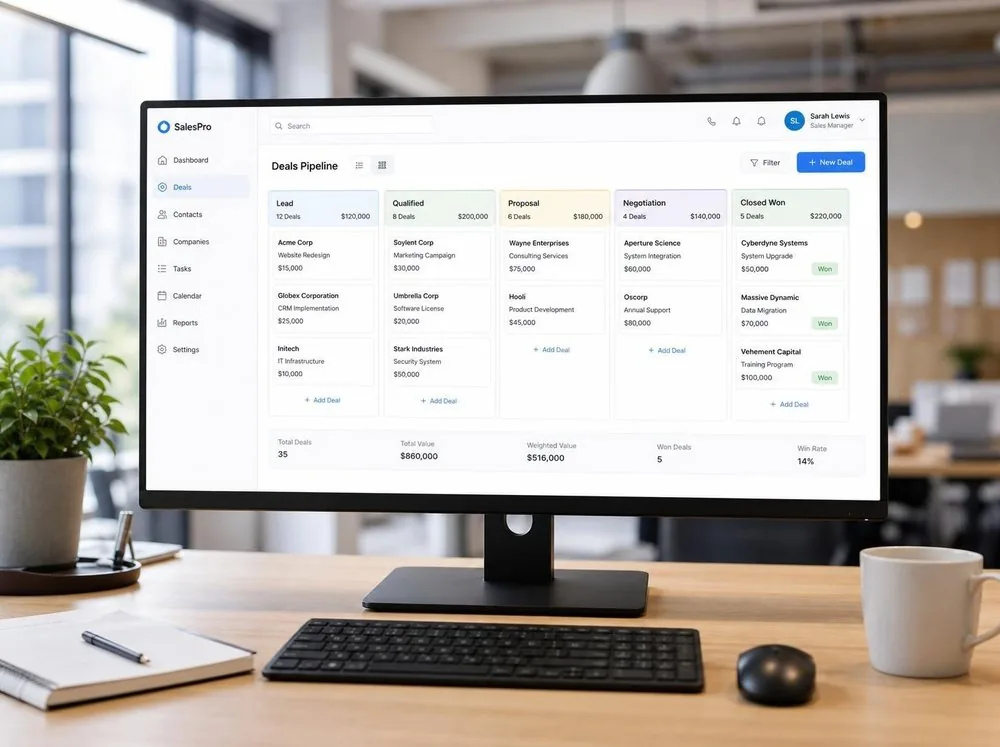
Most businesses that have a CRM believe it's helping them. Fewer can say, specifically, what it caught last month that would have otherwise slipped through. If that's you, the tool probably isn't the problem, how it's being used is.
1. Deals sit in the same stage for weeks with no nudge
A pipeline is supposed to show momentum. If deals routinely sit untouched in "Contacted" or "Proposal Sent" for three weeks and nothing flags it, the CRM is functioning as a list, not a system. Nothing is actively working to move revenue forward.
2. Follow-up depends on someone remembering
If the honest answer to "how do we make sure we follow up with this lead" is "whoever owns it has to remember," that's not a process. People get busy, and the leads that fall through are rarely the ones anyone chose to drop.
3. Leads get entered manually, hours or days late
Every hour between a lead coming in and it landing in your CRM is an hour where nobody's following up, and where the lead is probably looking at other options. If someone's copy-pasting information from an email into the CRM at the end of the day, that gap is real and it's compounding, and it's the same pattern behind the real cost of manual document handling more broadly. (See the real cost of a missed call for how fast that gap actually costs you.)
4. You can't answer "where is revenue stuck" without exporting a spreadsheet
A CRM that requires manual exports and pivot tables to answer a basic question isn't giving you visibility, it's storing data. You should be able to look at a dashboard and see where deals are stalling without doing analysis homework first.
5. Your team avoids updating it because it takes too long
This is the quiet killer. If updating the CRM feels like extra admin work bolted onto someone's actual job, they'll do the minimum, and the data will slowly stop reflecting reality. At that point, the CRM isn't just unhelpful, it's actively misleading.
What a working CRM actually looks like
New leads land automatically, tagged and routed without anyone re-typing them. Deals get nudged forward instead of just sitting there. Reporting on where revenue is stuck takes one glance, not an export. That's the difference between a CRM that stores your pipeline and one that's actually part of how you close deals.